Yara Peters · 30 September 2026
Strategic Approaches to Maintaining Digital Asset Integrity Amidst Service Reconfigurations
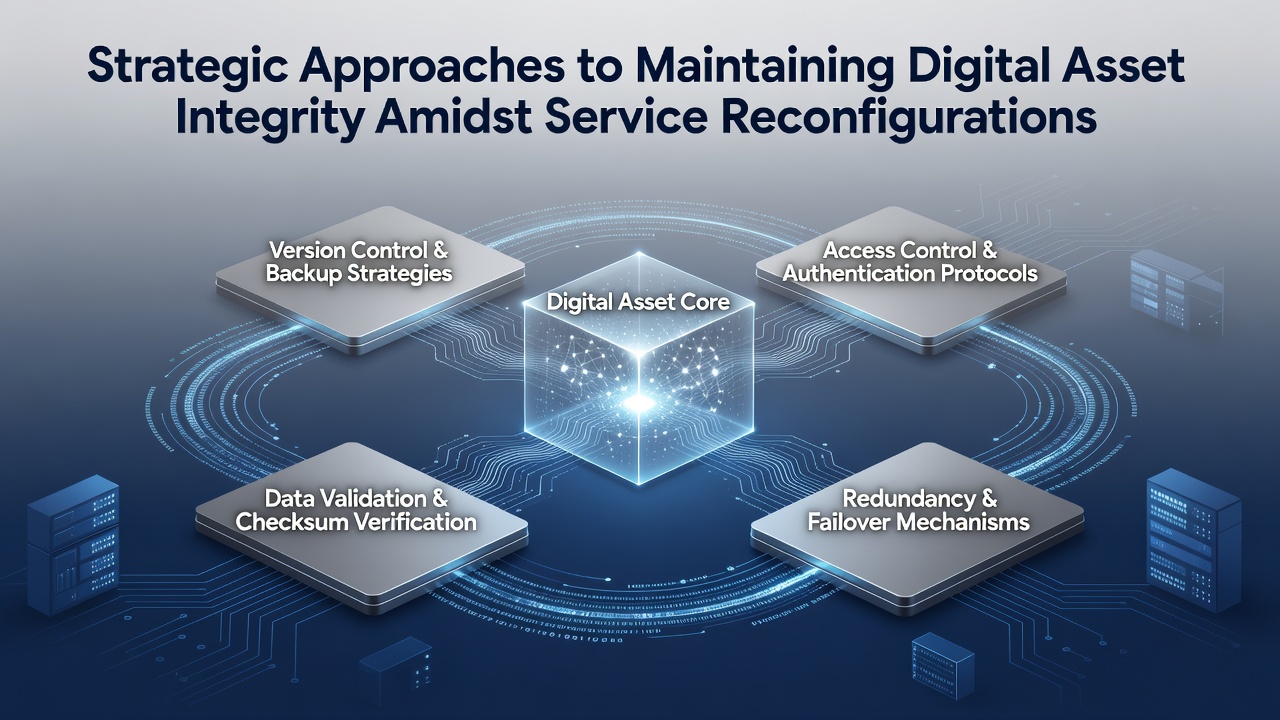
Service reconfigurations occur when organizations update infrastructure, migrate platforms, or adjust SaaS architectures, and these shifts demand precise methods to protect digital assets from corruption or loss. Data indicates that such events often involve simultaneous changes to storage systems, access controls, and network pathways, which creates multiple points where integrity can falter. Researchers at institutions like those affiliated with the National Institute of Standards and Technology have documented protocols that address these risks through layered verification processes. Organizations typically begin by mapping every asset type, from databases to encrypted files, before any reconfiguration starts. This step reveals dependencies that might otherwise remain hidden until a migration triggers failures. Teams then establish immutable snapshots at regular intervals, allowing restoration to verified states even if partial data drift occurs during the transition.Preparation Protocols Before Reconfiguration Events
Preparation starts with comprehensive audits that catalog asset locations, ownership metadata, and encryption keys, while cross-referencing these against service-level agreements. Experts note that incomplete inventories frequently lead to overlooked assets during scale changes, especially when third-party integrations handle portions of the workflow. Organizations implement checksum verification routines that run automatically on all critical files, creating baseline hashes that later confirm whether content remained unaltered through the process.
Communication frameworks play an equally important role, as stakeholders across departments receive synchronized timelines that detail rollback points and verification checkpoints. Data from industry reports shows these coordinated schedules reduce recovery times when issues surface mid-reconfiguration. Personnel also receive training on recognizing early indicators of integrity breaches, such as unexpected hash mismatches or permission anomalies that appear during access testing phases.
Technical Measures During Active Service Changes
During the reconfiguration itself, teams deploy continuous synchronization tools that mirror assets across redundant environments while maintaining strict version sequencing. These tools operate alongside real-time monitoring that flags any deviation in file size, timestamp sequences, or cryptographic signatures. And because service updates often span multiple time zones, automated logging systems capture every transaction with millisecond precision for later forensic review.
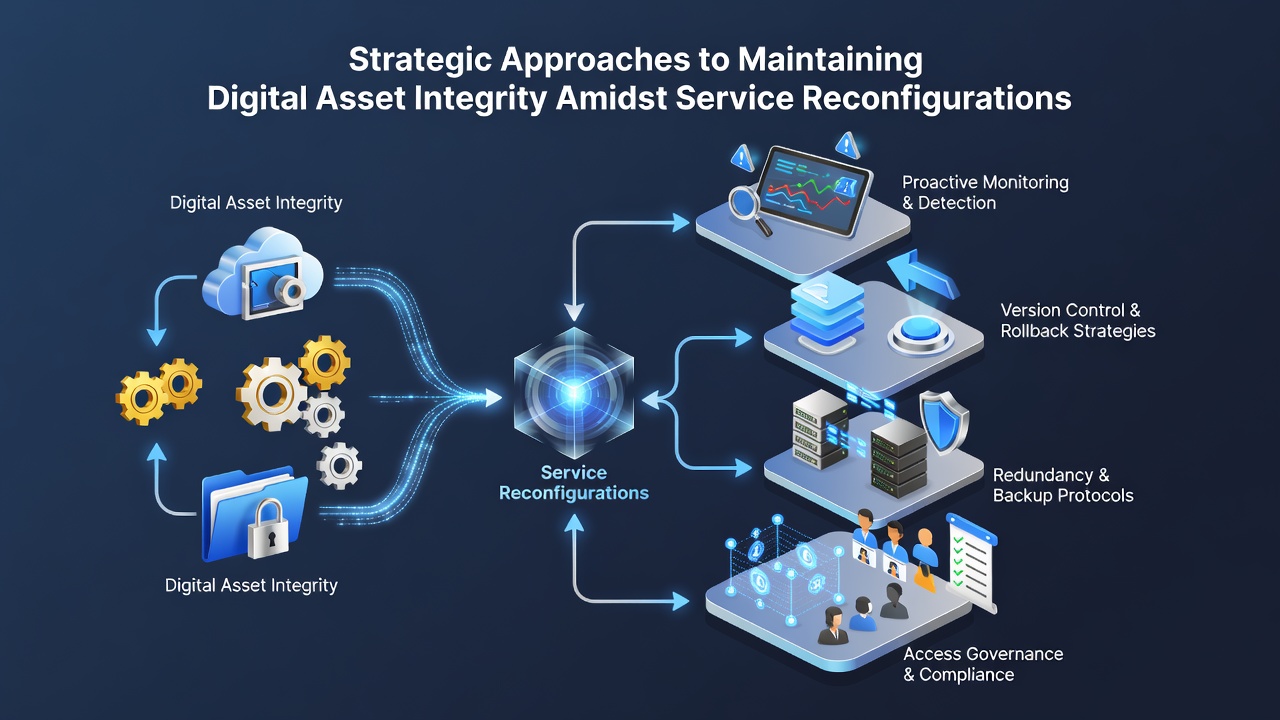
Encryption remains active throughout transit and at rest, with key rotation schedules aligned to the reconfiguration timeline rather than standard intervals. This alignment prevents key expiration from coinciding with system downtime windows. Observers have recorded that applying differential encryption checks at each hop reduces exposure windows compared to blanket approaches used in static environments.
Access controls receive temporary tightening during these periods, limiting privileges to essential personnel only and requiring multi-factor confirmation for any write operations. Such restrictions help contain potential insider or external interference while the underlying architecture stabilizes. Researchers from European cybersecurity centers have published findings indicating these layered controls correlate with lower incident rates in documented migration cases.
Post-Reconfiguration Validation and Ongoing Oversight
Once services stabilize, validation cycles begin with full asset reconciliation against the pre-change baselines. Teams execute parallel testing environments that simulate production loads while comparing outputs for consistency. Any discrepancies trigger targeted rollbacks before full user access resumes. According to guidelines from the Australian Cyber Security Centre, organizations that complete these validations within 72 hours experience fewer downstream integrity issues over the following quarter.
Long-term oversight incorporates periodic integrity scans that continue at reduced frequency after the initial stabilization period. These scans integrate with broader compliance reporting requirements, particularly as updated frameworks prepare to take effect in September 2026 across multiple jurisdictions. The changes emphasize auditable trails for every asset modification during service events, pushing companies toward more granular logging standards.
Regulatory Alignment and Documentation Practices
Regulatory bodies in different regions now require evidence of proactive integrity measures rather than reactive fixes alone. Documentation packages include timestamped logs, hash verification reports, and access audit trails that demonstrate adherence to evolving standards. Organizations often integrate these records into centralized governance platforms that support both internal reviews and external audits.
One documented approach involves third-party verification services that independently attest to asset states before and after reconfiguration windows. These attestations provide additional assurance layers when dealing with regulated industries handling sensitive data. Data from Canadian security agencies highlights how such external confirmations have streamlined approval processes for cross-border service migrations in recent years.
Conclusion
Strategic approaches to digital asset integrity during service reconfigurations combine thorough preparation, active technical safeguards, rigorous validation, and sustained regulatory alignment. Organizations that apply these methods consistently maintain verifiable records of asset states even amid complex platform adjustments. As frameworks continue evolving toward September 2026, the emphasis on documented, auditable processes is expected to intensify across global operations.